The Hard Ground - On Compost, Leadership, and What We’ve Been Throwing Away
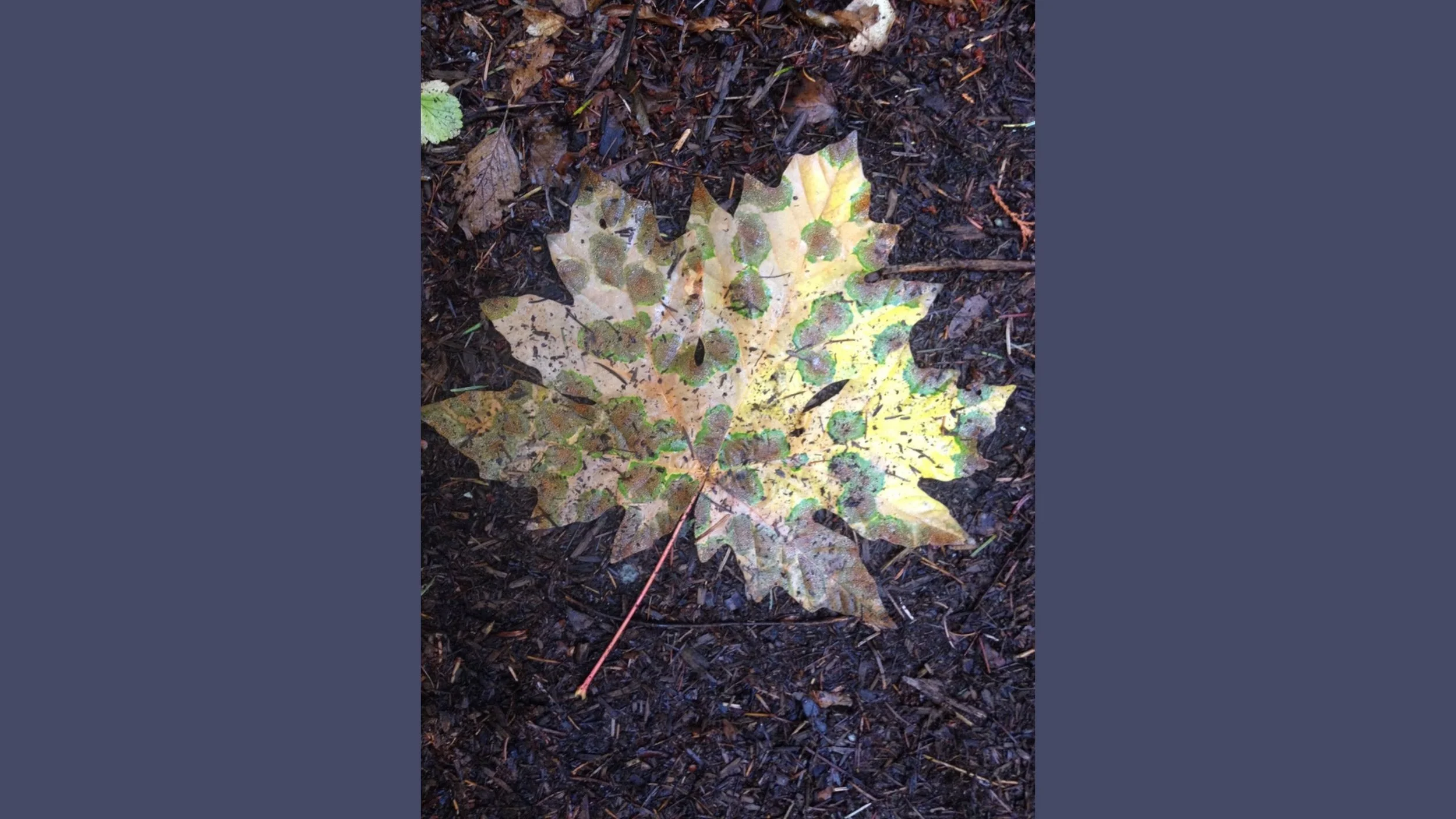
Photo Credit - Alana Peters - September 2014
For a hundred years, we’ve been throwing away compost.
Industrial agriculture decided, around the turn of the twentieth century, that the old practice of returning last year’s dying matter to the soil was primitive and inefficient. Chemical fertilizers were cleaner, faster, more scalable. You could measure their inputs. You could predict their outputs. You didn’t have to wait for things to decompose.
The ground paid the price. It took a few decades for the cost to become visible, but visible it eventually became: depleted soil, compacted earth, fields that couldn’t hold water, crops increasingly dependent on external inputs to produce what the living ground used to produce on its own. The efficient solution was, over time, a slow-motion collapse.
Regenerative agriculture has been recovering compost for the past twenty or thirty years, and with it a more complicated picture of how soil actually works. Two things, it turns out, have to be true for ground to sustain life. It has to be porous enough for water to reach the roots. And it has to have enough organic matter to hold the water once it arrives. Hard ground fails the first test. Sandy soil fails the second. Compost solves both, which is why farmers who understand soil treat it like a sacrament.
I am not writing about agriculture.
I am writing about a parallel arc in the work I do. For about the same hundred years, we have been practicing a version of leadership that treats human beings as inputs and outputs, that measures what can be measured, that prefers the legible to the actual. We have trained leaders the way industrial farmers fertilize fields: with doses of the right competencies, applied at the right intervals, designed to produce predictable yields. We have thrown away the rest — the grief that doesn’t fit on a calendar, the painful stories that are too damning to tell, the parts of a person’s life that happen outside the frame of work. Those things, we have said, are not the real work.
They are. They were all along. And the cost of pretending otherwise is becoming visible.
Most of the leaders I work with are standing on hard ground. They are capable, credentialed, and exhausted. Their interior lives have been compacted under years of performance, and the result is that the care they receive — from partners, mentors, their own children — cannot reach them. It runs off. It pools and stagnates. They know something is wrong, but they cannot name it, because the language for it was thrown away a hundred years ago along with the compost.
Some of them are fading. Still producing, still delivering, but quietly losing the thread of why any of it matters. Some are frustrated, pushing harder against the same walls they’ve been pushing against for years, burning through their teams in the process. Some are fawning, managing everyone else’s feelings while becoming strangers to their own. These are not personality defects. They are what happens when the ground goes hard and nothing can get in or out.
I had my own version of this, years ago. I needed something from the organizational leadership around me, and what I was offered instead was advice: keep this story to yourself. It’s too damning. I did what I was told. What followed was isolation, and eventually a collapse that was neither quiet nor slow. The hard ground does not only prevent care from entering. It eventually gives way altogether. The failure, when it comes, is often catastrophic.
I tell that story rarely and never in full, but I mention it now because it is the ground my work grew out of. The thing I most needed was composting — some living layer that could have held what I was carrying long enough for it to decompose into something I could stand on again. There wasn’t one. So I built one, slowly, over years. Much of what I now teach is the practice of building that layer, for leaders and for the organizations around them.
Here is the part that feels urgent to me now.
We are standing at the beginning of an era in which artificial intelligence will do more and more of the work that leaders used to do. It will analyze faster than any of us. It will synthesize across domains we could not cover on our best day. It will draft the memo, optimize the process, flag the risk. None of this frightens me. Most of it is work that was never distinctly human to begin with.
What AI cannot do — what it will never do, regardless of how powerful it becomes — is compost. It cannot take a lived experience of pain and let it decompose into wisdom. It cannot sit beside a grieving colleague and know what silence is for. It cannot care, which means it cannot lead, which means the thing leadership is actually for is going to matter more in the next ten years, not less. We are going to need leaders who can hold the parts of human life that will not fit on a dashboard. And we have spent a hundred years training them to discard exactly those parts.
The repair is not complicated, but it is slow. It begins with the recognition that the line between who we are at work and who we are everywhere else is a useful fiction, and then it proceeds with the harder work of living as if the fiction weren’t true. A client of mine once spent a season remodeling her bathroom, and she told me, almost in passing, that the project was really about practicing agency. She needed to see herself making decisions, spending money on her own preferences, watching a space transform because she had willed it to. A few months later, she made a decision at work that she had been unable to make for two years. She would tell you the bathroom did that. I would tell you she is right.
This is how the porousness works, when we stop fighting it. The things we learn in one domain become the compost we return to the other. The agency practiced in the bathroom feeds the agency available in the boardroom. The grief metabolized privately becomes the capacity to be present to someone else’s grief publicly. The care received at home becomes the care extended at work. None of this is separate. It never was.
We are more isolated, as a culture, than we have ever been. We have built walls higher than any generation before us has had to negotiate, and we have done it at exactly the moment when the human work — the irreducibly human work — is becoming the only work that matters. I do not know how to take the walls down at scale. I know only that the soil is not irreparable. That the ground can be composted back into porosity, one life at a time, one team at a time, one organization at a time.
What we have been throwing away is what we most need.
The ground is waiting to receive it.