
The Reservoir
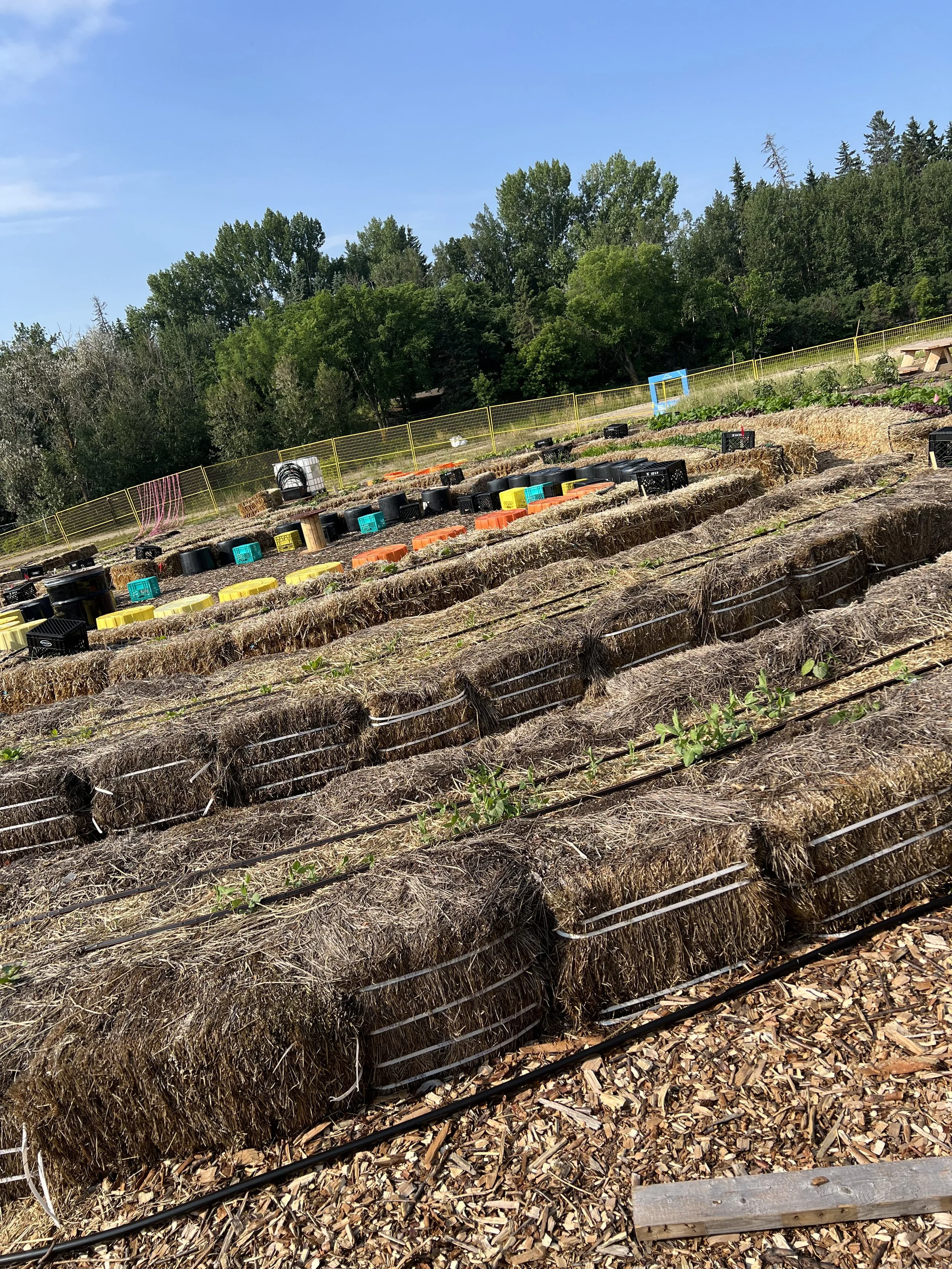
Photo Credit - Alana Peters - June 2023
In downtown Red Deer, on four acres of what is technically called a brownfield — contaminated industrial land left over from an earlier use, the kind most developers walk around rather than build on — a group of volunteers with an organization called Rethink Red Deer has spent five growing seasons doing work that wasn’t supposed to be possible.
The ground they took on is the former Electric, Light & Power site, unused for decades, its industrial history still visible in the soil itself. It is also temporary. The city owns it; the land is on the market; the garden exists in the meantime. Everyone involved has known from the beginning that the work is being done on ground they don’t own and cannot keep.
They are doing it anyway. They have hauled in compost. They have built raised beds. They have partnered with the African Caribbean Centre of Central Alberta, the Immigrant Women’s Association, local Indigenous Elders and Knowledge Keepers. They installed a thirty-foot medicine wheel garden. They train apprentices. By 2023 they were growing more than four thousand pounds of food a year and sending it to the Red Deer Food Bank and the Mustard Seed. They hosted a harvest supper that fed a hundred and sixty people.
Eventually, the ground will go to its next use. That was the deal from the beginning. What’s worth noticing is what the volunteers have built anyway, and what of it will remain when the fences change hands.
The garden as a physical place is finite. The infrastructure the volunteers actually built is not. It is carried in the relationships between the people who worked that ground, in the skills of the apprentices who trained there, in the knowledge the community now has that brownfield land in a Canadian city can be brought back to life. None of that is in the soil. All of it is built on the soil. The soil is where it happens, but it is not what is being made.
What the volunteers carry out of that work is not the garden. It is what a team carries out of any good work: the relationships that survived it, the skills that were honed in it, the demonstrated knowledge that something hard was possible. These things travel. They show up in the next project, the next role, the next difficult conversation. They are portable in a way the land never was.
This is the gift and the power of community and relationship. In the exercise of working together, we heal the land and we heal each other. Neither happens without the other.
Trust in organizations works the same way, and most leaders get the timing backwards.
Most leadership writing treats trust as a feeling — something that develops between people over time, or emerges when a team “works well together.” This is the wrong frame. Trust behaves more like stored water. It accumulates through specific practices repeated in low-stakes moments, and it becomes available to be drawn on in the high-stakes ones. The leaders who have trust in the hardest moments of their work are, almost without exception, the ones who were building reservoirs when nothing was yet on the line.
The misframing costs organizations constantly. When a crisis comes — a layoff, a restructure, a public failure, a difficult conversation that can’t be avoided any longer — leaders reach for the trust they need and discover the reservoir is empty. They try to build it then, in real time, under pressure, in the middle of the thing that required it. It doesn’t work. Trust built under duress is possible but expensive, and the costs are paid in attrition, disengagement, and quiet resignation.
The building happens earlier. It happens in the rhythms that don’t get cancelled when the quarter heats up — the standing one-on-ones, the retrospectives that examine ruptures with curiosity rather than blame, the disagreements handled in ways that leave the relationship intact. It happens when a leader models requesting help as a regular act rather than a crisis move. It happens in what a team notices and what it ignores, in the small conversations that accumulate into the larger ones, in the months when nothing in particular is wrong and someone is still doing the work of listening.
None of these practices feels like much in the moment. They don’t produce visible results on a quarterly report. They do what compost does — they thicken the layer between what’s seen and what’s growing underneath, and they make the ground capable of holding what will arrive.
Here is the difficulty, and it is real. You don’t know which crisis will come for your team. You don’t know whether you’ll still be in the role when it does. You don’t know whether the culture you’re shaping will survive the next acquisition or restructure or leadership change. The work of building trust asks you to invest in something you cannot guarantee — often on ground that, sooner or later, will not be yours to tend.
The volunteers in Red Deer are building the garden anyway.
This is what I want to say most directly: the fact that the ground is uncertain is not an argument against building infrastructure on it. It is the condition under which infrastructure actually matters. If the ground were permanent, anyone could build. What makes the work of leaders worth anything is that they build without knowing what they’ll keep.
And in the decade ahead, this becomes more urgent, not less. AI is going to do more of the legible work of organizational life — the analyzing, the scheduling, the document-drafting, the process-optimizing. What it will not do is build the reservoirs. It cannot be the presence in a one-on-one that another person trusts. It cannot admit it doesn’t know and let that admission make room for someone else’s uncertainty. It cannot sit with a colleague who is angry and let the anger come through without turning it into damage. It cannot receive hard disagreement and stay in relationship with the person on the other side of it. These are human acts.
Which means the leaders who know how to catch and store trust — who do the slow work in the easy weeks so the reservoir is there in the hard ones — are going to matter more in the years ahead, not less. This is not a soft skill. It is the central infrastructure of any organization that intends to be worth leading.
On four acres in downtown Red Deer, people who know they cannot keep the ground are growing food on it anyway. They are feeding people who are hungry right now. They are building relationships that will outlast the garden. They are showing a city that contaminated industrial land can come back, and they are training the people who will know how to do it again somewhere else.
The land will eventually be sold for another purpose. The people will have a return on their investment that cannot be quantified.